Thursday, October 22, 2015

Experts of a different kind

COMMENTARY

Level Field


Some people are of the opinion that local TV commentators and football pundits should perhaps apply for the national coach's job.
After all, they question the tactics, line-ups, substitution, formation and just about every move the coach makes on the field.
And this sort of commenting is not confined to Malaysian football but also encroaches on international football.
Yes, we have among the commentators a few ex-national players who have earned a few international caps, some who have played at state level and one or two coaches with minimum experiences. But some of them are no footballers.
Of course, times have changed in sports commentary and fans are more knowledgeable and expect expert opinions. For that, we need credible people.
Numerous sports fans have told me they turn off the commentary because they find it intrusive and irritating. But then again, there are those who love the commentaries and want to give their ‘expert’ views too. That sometime makes the coverage different and more interesting.
What is unbearable is when the commentators jump up from their chairs and start screaming when Malaysia scores a goal. How professional is that?
Without doubt, there are mixed views on the subject. Some love the commentators while others turn off the volume or switch channels when it is commentary time.
“Most of them do not know their job. As a commentator, one has to bring the game to the audience and present the facts and figures to help listeners enjoy the broadcast, be it on radio or television," a veteran sports commentator Datuk Rahim Razali told Malay Mail last week. 
“But these days, commentators have become analysts with little knowledge of the sport or qualification to comment. The rule in journalism is to avoid saying ‘I’ but use ‘we”. But these days, everyone is an expert.”
Sadly, instead of paying heed to this guru of commentary, many questioned him about going public with his opinions.
“As a fellow broadcaster, he should not have taken his fellow broadcasters to task,” said a TV commentator.
Still, it is one thing to have the gift of the gap and another to be professional.
At the rate our commentators question the coaches these days, maybe they should be allowed to handle the football teams for a day and watch them convert their comments into action.
But in all fairness, we do have commentators and pundits who know their stuff and are a delight to listen to. However, they are a rare breed. These days, anyone and everyone can become a commentator or pundit overnight.
Maybe, it is time television and radio stations became stringent about quality and trained their personnel in broadcasting and sports journalism before letting them go on air. Or they could hire those who have had formal training or education in broadcasting.
In the print media, a sports journalist has to earn his stripes before he gets his own column – sometimes after 15 to 20 years. These days, even those with a few years’ experience can become a columnist.
Coming back to the present, sport journalists do not ask questions at press conferences, waiting instead for press releases to base their stories on. Indeed, sports journalism has been made easy these days. 
In the old days, the first thing we were told by our editors was that we had to be neutral and objective in our coverage and writing. Now, we have sports journalists cheering and running around with the Malaysian flag in the press box, which was once even reported on the Manchester United website – after such an incident happened when MU played Malaysia here.
If only the editors of old could see what is happening these days. They would probably choke. But at the end of the day, the excuse would be that the times have changed.
Still, nothing beats true journalism – honest, professional and sporting to the core.

TONY MARIADASS is a sports
journalist with more than
three decades of experience
and is passionate about
local sports.
He can be reached at
tmariadass@gmail.com
Twitter: @tmariadass​​


Saturday, October 10, 2015

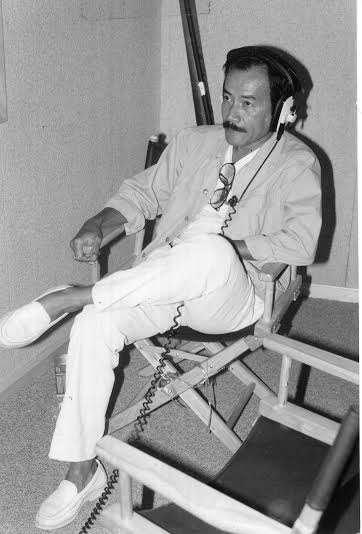
Rahim, golden voice of sport


ICON: DATUK ABDUL RAHIM MOHAMED RAZALI

By Tony Mariadass
tmariadass@gmail.com
Pictures by: Azneal Ishak

Datuk Abduk Rahim Mohamed Razali has become a name and a voice familiar to millions in Malaysia.
For close to six decades his rich voice, which mellowed over years, was an integral part of sports reporting and coverage.
He has come across strongly with his shrewd judgement of characters and ready humour.
However, it was by chance that Rahim had his first taste of radio sports commentary in 1959 and he was natural from the first instance.
But radio broadcasting was not even his first love. It was acting and film directing.
Yet, Rahim Razali as he is popularly known in the sports circle, became even more famous that any Malaysian sportsperson who has graced the sporting arena.
Fifty-six years later, Rahim who is 76, is still looked upon as the ‘guru’ in sports commentary.
Although he hardly commentates now, he is still active with his own sports programme with Astro Arena where he hosts the Arena Sukan programme which features icons from the past.
Rahim had a same named sports magazine programme when he was with Radio Television Malaysia (RTM).
Recalling his first baptism of fire to sports commentary, he said it was at the 1959 Malaysian Amatuer Athletics Union (MAAU) meet at Merdeka Stadium.
“I was fresh out of school from Ipoh and came to Kuala Lumpur and while waiting for a government scholarship, I applied for a temporary job with Radio Malaya. I got a job  as a temporary broadcasting assistant Grade 3 in the Malay service,” related Rahim.
“I loved sports from my schooling days at Sekolah Melayu Kg. Tembok and Anderson School in Ipoh, said Rahim who eight in a family of 12.
He lost his mother when he was nine and father when he was 13 and was brought up by his grandmother.
“While I played football, rugby and my favourite sports hockey, I was not national material. But I had a fascination of sports rules of all sports and read books about the rules.
“Then one day while with Radio Malaya, I had dropped by at the Merdeka Stadium to watch the MAAU athletics meet. I was watching from the broadcasting box when suddenly the commentator, Tadza Zaaba, waved at me and gestured for me to come him. He just handed the mike to me and his voice which hardly could be heard, asked me to continue.
“Tadza had  pharyngitis and could not continue. I started commentating referring to some notes and facts Tadza had on the table. It was live coverage and I was nervous. But I got by.
“When from then now, Tadza said I will be doing sports commentary,” said Rahim who mainly does his commentary in Bahasa Malaysia.
“Before I can even settle down, I was asked to cover the 1959 Seap Games in Bangkok for my international debut. I had no formal training in broadcasting and it was through experience of learning while on the job over the years that I have managed.”
In 1960, Rahim Razali was offered a Colombo Plan Scholarship to study Chartered Accountancy in Melbourne, Australia. 
In Australia he continued his love for sports by taking cricket and tennis.
He returned in 1965 and it not work as an accountant but in advertising and public relations. He has worked as a creative director, deputy managing director of an advertising company before becoming a managing director of a communications company before finally forming his company – ASA-XX Film Productions in 1984.
“Radio broadcasting has always been partime for me, as my career was in advertising and public relations, while my passion was acting and film directing.
“Asked how he managed to divide his time between the three ‘jobs’, he simply replied: “I was young and energetic.”
But as an afterthought, with a tinge of sadness he said: “I actually regret that as I was so occupied with doing what I loved and neglected by family.
“It was wife (Salmiah Momin) who brought up the children and I missed them growing up.”
Rahim has a son, Rizal and two daughters Nadiah and Kartina Nurina and seven grandchildren.
“I wished I could turn back the clock to have spend our time with my family.”
Rahim’s achievements in both sports commentary and him as a producer, writer, director and actor is indeed exemplary.

In sports his career as a radio and television sports commentator he has covered five Olympic Games, six Asian Games, four Commonwealth Games,
numerous SEA Games from his first in 1959, five World Cup Football Finals, four World Cup Hockey finals, numerous Thomas Cup finals (beginning 1967), Davis Cup, Merdeka football tournaments, Malaysia Cup, and various other championships involving a variety of sports, including the live commentary for the World Heavyweight Boxing Championship between Muhamad Ali and Joe Bugner in Kuala Lumpur in 1975.
And it was the boxing fight which brings fond memories to Rahim.
“It was a memorable coverage because I got up close and personal with Muhamad Ali during my coverage of the event,” said Rahim.
“And on the day of the fight I was seated at the ringside commentary box and Ali before the fight and doing his “rope a dope” came to his corner and looked down at me. After a while he wiped his sweat and splashed it on me. My whole face was covered with Ali’s sweat,” laughed Rahim.
He said his other memorable moment was when he covered the 1988 Seoul Olympics.
“Marina Chin had just retired and we had roped her in to co-host the live commentary with me. While I thought her the ropes of broadcasting, she thought me what athletics was all about. It was a great learning curve.
“Also at the Games I covered the battle between Ben Johnson and Carl Lewis and the triumph of Flo Jo. That was indeed memorable.”
He is also remembered of being an anchor for live coverage of the 1977 Kuala Lumpur Sea Games where he was on air for a goo 30 continuous hours.
He then spoke of his most frightening moment in sports commentary.
“It was the 1967 Thomas Cup final in Indonesia. Malaysia went to win its fourth title beating Indonesia but not before play was suspended with Malaysia leading 4-3 in a best of nine series because of unruly crowd.
“The Press Box was in the middle of the fans and I was threatened by the fans and asked to shut up or get out. It was really frightening and we had to be escorted out together with the Malaysian team by police.”
On current sports commentators, Razali said that most of them do not know their job.
“As a commentator one is to bring the game to the audience and give facts and figures to help them enjoy the broadcast be it radio or television.
“But these days commentators have become analyst with very little knowledge of the game or the qualification to comment.
“And the rule journalism is to avoid saying “I” but use “we’. But these days every is an expert.”
However, Rahim said that it was more challenging for commentators because the listens are more knowledgeable and have easy access to facts and figures. These days commentators cannot afford to make mistakes. And they will get calls or letters from the audience if they err.”
While he always remembered as the golden voice of sports commentary, Rahim is even more popular as an actor where he has won several distinguished awards both locally and international,  has written and directed nine feature films since 1981, acted in 15 feature films, written and directed more than 50 drams for television, plays and series since 1985, acted in lead roles in more tha 100 television dramas (since 1967) and written and directed plays and played lead roles in English and Malay since 1967.
Indeed, Rahim is multi-talented personality who had excelled in all fields with distinction.
He is indeed a rare finding and will be forever be remembered as one-of-kind in the broadcasting industry.


Friday, October 9, 2015

FAM must accept punishment, fans need to repent

Commentary

Level Field


The Football Association of Malaysia (FAM) should count their lucky stars while Ultra Malaya fans should accept responsibility for the sanctioning of the national football body by FIFA's disciplinary committee after crowd disturbance led to the abandonment of the FIFA World Cup qualifying match between Malaysia and Saudi Arabia on Sept 8.
After studying the reports of the match officials, FAM’s account and relevant videos and photographs, the committee decided that the next home match of the ‘A’ representative team of Malaysia in the 2018 FIFA World Cup qualifying competition (Malaysia v UAE on Nov 17) will be played without spectators. FAM was also fined CHF40,000 (RM180,000) and given a warning.
Furthermore, the disciplinary committee decided that the Sept 8 match be declared as lost by forfeit by Malaysia (0-3).
Upon being informed of FIFA's decision, FAM are said to be looking if there is room for appeal and if there is, to submit the appeal. But if they do so, they might be courting more trouble from the international body.
FIFA have been thorough in their disciplinary proceedings, which began after several incidents, some of which involved smoke bombs and flares, occurred within the Shah Alam Stadium, which then led to the match being abandoned in the 88th minute.
FAM were punished for violating five articles and to seek leniency certainly looks like an exercise in futility.
An appeal by FAM would only see the national body being sanctioned further for not knowing the procedures adhered to by the FIFA disciplinary committee.
Besides, for FAM to even think of appealing suggests that they support the behaviour of those troublemakers when they should be going all out to stamp out football hooliganism.
As far as security is concerned, FAM should be doubling their efforts with the assistance of the police to ensure that there is no repeat of ugly incidents.
Also, for interim national coach Ong Kim Swee to say that playing in an empty stadium would put his team at a disadvantage implies that he does not mind unruly fans.
Lest Ong has forgotten, on Sept 8, a missile had narrowly missed him.
Would he be singing this tune if the missile had hit and injured him? Or is he playing to the gallery to gain support for a position as permanent national coach?
The bottom line is that unruly fans must be punished and hopefully barred from future matches to drive some sense into their heads.
Of course, genuine fans will be affected by the ban but the rules are clear on crowd violence and match disruptions. The price of violating them has to be paid.
Ultra Malaya leader Alfadli Awaluddin wants those who took his gang to task for their irresponsible act to look at the root cause of the incident. But that is immature thinking.
Nothing justifies their rowdy behaviour, which put the lives of innocent fans, especially women and children, and players and officials at high risk.
Whatever issues Ultra Malaya may have with FAM and the poor performance of the national team should be addressed through the right channels, like sports lovers would do.
Flares and smoke bombs are not going to change anything. In fact, they do more damage to Malaysian football.
Sadly, bad fan behaviour has been on the rise at both local and international matches. Flares and smoke bombs have become the norm at M-League and Malaysia Cup matches and in the last two years, FAM have been sanctioned twice by the Asian Football Confederation.
The first time was in March last year, when there was crowd trouble at a Malaysia versus Philippines International “A” friendly match. FAM were fined US$10,000.
Then in December last year, poor spectator conduct at a Malaysia versus Vietnam match in the 2014 AFF Suzuki Cup saw FAM being fined US$35,000 and ordered to play one International “A” male representative team official match without spectators. In accordance with Article 33.4 of the Code, this order is suspended for a probationary period of two years. FAM were also warned that should another violation of Article 67 of the Code occur within the probationary period, the suspension would be automatically revoked and the sanction applied, and a repeat violation of the provision would warrant severer punishment.
Thus, FAM and Ultra Malaya should stand down and instead seek to revive the battered image of Malaysian football.
For starters, efforts must be made by FAM's security committee to ensure strict measures are enforced. All persons and vehicles at the entry points of the outer and inner perimeters of stadiums should be thoroughly checked. The same rule applies to the entry points to areas that are not open to the public. These security checks should ensure that all persons possess a valid ticket, accreditation or other permits to gain access to the stadiums; that no one has in his possession any weapon or other prohibited items as set out in the stadium code of conduct or any other dangerous object that may not, for legal reasons, be taken into the stadiums, including aggressive or racist banners and laser pointers.
The rules are crystal clear on the liability of spectator conduct, where improper behaviour includes violence against persons or objects, letting off incendiary devices, throwing missiles, displaying insulting or political slogans in any form, uttering insulting words or sounds or invading the pitch.
It is FAM’s responsibility to ensure that the stadiums are safe, that the security management team is aware of and fully understands its obligations and fans are well behaved.

TONY MARIADASS is a sports
journalist with more than
three decades of experience
and is passionate about
local sports.
He can be reached at
tmariadass@gmail.com
Twitter: @tmariadass​​


Khaw switches nets


PERSONALITY: Khaw Hock Seang
By Tony Mariadass
Pictures by Azneal Ishak

Former national juniors’ hockey goalkeeper Khaw Hock Seang from stopping goals from hitting the net, is these days putting fishes to his net.
The relationship manager with RHB in Klang who turned 52 on Oct 8 was a former Selangor player who turned out for the National Junior World Cup Oceania qualifying squad in 1984.
Khaw who hails from Penang, but studied at St Michael’s Institution in Ipoh, plied his hockey trade in Perak for a short period before moving to play for Selangor and now resides in Klang.
Since he quit playing hockey ending his career for his employers UMBC in 1991, he has turned to fishing for his ‘kicks’ – a hobby which he has had since his schooldays.
Khaw who once was stopping goals from getting past him into nets, was a member of the Selangor Razak Cup champion squad in 1984 and Hussein Onn Cup champion in 1987.
What started off as a weekend pastime, fishing has now become an obsession for him having to head out to fish every Saturday, Sunday and holidays.
His favourite place is at the Fly Fishing & Lure Casting, at Empangan Sungei Air Kuning at the Taman Botani Negara in Shah Alam Seksyen 8, while on long weekend holidays he travels to Thailand to fish at Bungsamaran.
“I am only into lake fishing and most of the time put back the fish into the lakes,” said Khaw who surprisingly does not eat fish.
At Fly Fishing & Lure Casting, it is a rule that all fish caught must be released back into the former dam.
“At places where I can take back the fish, I either give it away or sell it off,” said Khaw.
“I don’t eat fish because I cannot bear to eat my catch. I do fishing for leisure and relaxation and I feel it is not right for me to eat my catch.”
Khaw said the thrill of catching a fish was something once someone experiences, will immediately get hooked to the sport.
Indeed it is was Mailsport cameraman Azneal Ishak tried his hand at the request of Khaw and immediately reeled in a fish and said that the experience was ‘out of the world’ and vowed to return.
“Besides fishing is a great way to get away from stress, have peace and a great form of relaxation. Patience is a vital ingredient in fishing and this helps calm oneself and builds character,” said Khaw a musician too.


Khaw said over the years, he would have easily spend about RM30,000 on equipment for fishing.
“The good fishing rods and equipment can be expensive but once one gets hooked onto fishing, you will settle for nothing less than the best equipment.”
Among the expensive brands Khaw has in his collection include Shimano, G. Loomis and Abu Gracia Sweden which easily cost anything between RM1,000 to RM2,000.
Khaw said that his biggest thrill was when he reeled in a 60kg catfish in Thailand.
“But whether it is a big fish or small fish, the difficulty to reel them in after they bite the bait is a challenge and thrill by itself. It is indeed a battle as the fish will try all ways to get off the bait and sometimes the stronger ones with snap the line to escape,” said the father of two daughters - Sheela and Gautamaraj.
Khaw said that the Fly Fishing & Lure Casting Centre is ideal spot for city folks in Kuala Lumpur and Selangor who are into fishing.
“It is a centre right in the middle of the hustle and bustle of the city and a great get away which is only minutes away,” said Khaw.
“When I am here, I feel like I am on a different planet with the cool serenity, quietness and peacefulness.”
The centre is run by Nik Mohd Rahimi Mohd Kamaluddin, an engineer, who like Khaw loves fishing and the peaceful surrounding.
He manages the former dam for the Taman Botani Negara and charges very reasonable rates.
He charges RM30 for a full day of fishing from 7.30am to 6.30pm. Operates six days a week and is closed on Tuesday and opened on public holidays and school holidays. The centre also has an archery centre to make a family outing site. For archery, Nik charges RM10 for 20 arrows which includes coaching if requires as Nik is an ardent archer.
“We get a lot students coming for a day outing during weekends and especially school holidays. Otherwise, we have our regular anglers who love the peaceful surrounding and not to mention the bountiful of fishes available to be fished.”
Among the fish in the lake include talipa, pacu, patin amazon red tail, baung, toman, catfish, jelawat and haruan to name a few.
As an added attraction the centre has the friendly monkey – Jackie – who was given to Nik by a friend.
It has a special attachment with Khaw and would even sit with him to fish at times and sometime in his mischief will even try to fish by itself.
“Jackie is my fishing buddy here. He is a delight to be with and I look forward to every weekend to be here not only to fish but bond with Jackie,” said Khaw.
Khaw said many friends have asked him to take them fishing with him, but more often than not declines.
“Not that I do not want my friend to fish, but I am afraid of my friends’ wife or girlfriends accusing me of taking them away from them, said Khaw with grin.
“One can easily get hooked with fishing and from some of my bad experiences previously with my friends, I have vowed to fish on my own or fishing enthusiast who are already fishing.
“I am happy fishing alone and enjoy it very much. Besides I have friends like Nik and Jackie to keep me company.”
Indeed, Khaw is fast been known as “Man with rod will travel.”


Saturday, October 3, 2015

Amazing gift of Father James


Malaysia loss is Indonesia’s gain.
Reverend Father Irudayam Singarayar Sebastian James was in Malaysia in the early 60s for a year and was attached with St Francis Xavier Church in Petaling Jaya and was serving the Indian community of St Joseph, Sentul, Fatima Church, Brickfields and Assumption Church, Petaling Jaya.
Father James had applied for a visa to continue working in Malaysia, but he was denied and he returned to India.
He then went to continue with his studies in theology in Java. He was there for two years and was getting bored until he met a man from Medan and suggested that he go to Medan for a holiday where there were many Indian Catholics.
He did that in 1968 and that was the beginning for his love for Medan where he has become an icon not only to the Catholic community but the people of Medan for putting the city onto the world map with the building of the Our Lady of Good Health Church, Medan (Graha Marai Annai Velangkanni) also known as Our Lady of Vailankanni (and in Tamil - Ārōkkiya mātā). This saint knows its origin with an apparition in the 17th century in Velankanni Town, Tamil Nadu, India. Graha in Sanskrit means home, sanctuary or shrine.
The temple is an imposing building, of two storeys and a small tower of seven storeys in Indonesian style that attracts attention from the main road (it is situated in the small road Jl. Sakura III besides Jl. Simatupang).
Such is the impression on visiting this beautiful Marian Shrine, christened as Graha Maria Annai Velangkanni.
It has become important pilgrimage site in Asia for all walk of life, culture, religion and race and iconic symbol for Medan which is also a tourist attraction.
The magnificent shrine is the first in Indonesia and the second in the world as pilgrimage centre besides the original at Vailankanni in India.
The architecture of this shrine is totally different from the norm. Several religious symbols adorn the building, but these are in harmony with the structure of the shrine and form a beautiful unity. Aesthetic and religious values blend in to express the loftiness and the great mystery of the divine majesty.
Father James, an Indian Jesuit missionary in Indonesia, for the past 45 years became an Indonesia in 1989 and was asked to take an Indonesian name and thus became James Bharataputra Sebastian James.

“It was as though a dream that had come true and a miracle that had taken place, because with only a strong faith and conviction in the Providence of God as my initial capital, that I ventured into such a monumental work that was eventually to cost more than four billion Rupiah (equivalent to US$ 500,000) at a time when the Indonesian national economy was very unstable,” said Father James when met in Medan recently.
“Certainly it seems illogical and uncommon for many, but not for a man of faith. Moreover, with no building committee for fund raising, no qualified designer and architect, no professional contractor and no real artist to do the paintings and relief works, except a highly qualified Catholic engineer, Johannes Tarigan, who offered his services free to work out the structure and supervise the construction of the building, it seems madness to venture into such a huge project.
“But as it turned out, the fact that God was behind all these efforts to create such a beautiful church and community hall is plain for us to see.
“The whole concept and format of the shrine were inspired by God in my constant prayer of contemplation on the Mystery of the Incarnation, as given in the spiritual exercises, a book of jottings of spiritual experiences of St. Ignatius of Loyola, the founder of the Jesuit Order and a great spiritual Master who led the seekers of God into God-experience through retreat. Following exactly the points of that contemplation as suggested by St. Ignatius, I deigned the whole building as the construction went on.”
Father James came to Medan to serve at St Anthony’s Church in the 70s before he wanted to build the church.
During his work with the Indian community in the church he had purchased a land at Tanjung Selamat (Bay of Salvation) to relocate the Indian community from a slump area.
But they did want to leave the original area.
Father James then wanted to build a church and approached the Archbishop A. G. Pilus Datubara who gave his blessings.
He used the land he had purchased earlier as the site for his project.
“Having been relieved of all the parish commitments, I had concentrated only on this project during the four years of the shrine construction ( from September 2001 to September 2005), through planning, playing the roles of an architect by designing of a contractor by employing ordinary workers on daily wages and supervising the construction day in and day out. But God has been inspiring me all the time, providing the funds all the means needed in so many mysterious ways.
“I am a dreamer by nature and I dream dreams. I dreamt of the shrine to be an evangelizing edifice to tell the story of salvation history of mankind, based on the bible and the teachings of the church. Through its format, symbolisms, ornaments sculpture and paintings. Attempting on enculturation I chose Indo-Mogul architectural combination by which to explain that this shrine is the place where heaven and earth meet and a place where the divine and the human embrace each other and it is here where God wants to meet His People irrespective of race, creed, and language.
“All the credit and glory goes to God because he had the plan to be realised and used mostly amateur hands to achieve this marvel. At times God’s inspirations came to me during my dreams and at times I wake up from my dream and jotted down some of the details of my dream lest I forget them. I do not know how to describe this extraordinary spiritual experience by which I felt that it was God who had been dictating his plan in detail as I was proceeding with the construction. Mary Annai Velangkanni seemed to look after my health all the time, although I had had some health problems before I started on this job. “Twice I had serious motor cycle accidents and came out unscathed thanks to the protection of Mary. At no time did I feel worried about funds for the work because the Lord was providing my weekly needs through the generosity of hundreds and hundreds of Marian devotees who had been sending donations through my bank, mostly in anonymity. Hardly, ever did I feel tired or exhausted in my work at an age of 68 then,” said Father James who is 73 now.
Father James said the main aim in putting up this Marian shrine here in Tanjung Selamat Medan is not because some extraordinary and miraculous thing had happened or some apparitions of Mary had occurred to warrant a shrine here.

“But on the contrary. I wanted miracles to happen here in Medan as was at Velangkanni in India for more than three centuries drawing people from all walks of life and status. As every shrine of pilgrimages is a place of welcome and encounter of God with His People and on the same token people with people who come together as children of God respecting one another and loving one another as brothers and sisters of the same Father in Heaven, irrespective of one’s race, tribe, tongue or belief.”
And it did happen. The first was the arrival of the statue of life-size Our Lady which was Father James ordered from India but was delayed. But arrived two hours before official laying of foundation stone for the shrine on Sept 8, 2001, the birthday of Our Lady.
The second a year later when Father James rented room in town was gutted by fire brining it down to ashes.
But when he was rampaging through the room, he found a packet with 10 million rupiah (donations for the building) two bibles and a hymn book intact untouched by the fire and safe in its entirety
The third happened on the same day a year after the official opening of the church (Oct 1, 2005 – by then acting Governor Dr Rudolf Pardede of North Sumatra Province) when mysterious waster was coming out of the feet of Our Lady. A vision told Father James to dig under the feet and a fountain of water gushed out. It is pure clean water which is drinkable and the fountain today is the source holy water from the shrine.
Graha Maria Annai Velangkanni is certainly a dual phenomenon, admired by everyone who has visited this Marian Shrine. It is like a mind of grace and blessings comparable to a spiritual treasure that needs to be hunted and above all, it is a mystery to be explored.
Apart from the unique blend of Indo-Mogul architecture, apart from the importance of its religious symbols and its biblical content, and apart from its awesome majestic look, Graha Maria Annai Velangkanni is also ‘a beauty that will be a joy forever’ with the harmony of its rainbow colours.
Through its seven rainbow colours, Graha Maria proclaims the message of the Gospel.
As turned out, it is only at the end of 2011, almost seven years after the original painting of this colourful Graha Maria discovered a profound meaning of the colours that are used on the building by Father James.
Initially the main purpose of painting Graha Maria in multi colours was to attract the attention of the passers-by. But amazingly enough it seems that it is God, the real architect of Graham Maria who seemed to have chosen the seven colours of the rainbow which is a sign of hope and had so arranged them in an ascending order as to reveal his grand plan of salvation of the human race. Everyone who comes to visit this Marian shrine, irrespective of race, language, religion, and socio-economic status will certainly discover the significance of its colours.
The amazing thing about the colours of Graha Maria is that it took seven years to discover their significance intended by God, the original architect who seems to have arranged them in an ascending order -black-grey-white-red-green-blue and yellow.
The interior of the church that is fully studded with relief, paintings and ornaments is a feast for the eyes. The altar with its background is another unique feature.
The feast of Graha Marai Annai Velangkanni is celebrated starting on Thursday and culminating on Oct 3.
While the feast will be an event not to be missed, but a visit to this stunning church is a must when visiting Medan.

Thoroughbred cricketer and medical guru


ICON: Datuk Prof. Emeritus Dr. Alex. E. Delilkan

By Tony Mariadass
  
Datuk Prof. Emeritus Dr. Alex. E. Delilkan is a name that will live forever in Malaysian cricket and the medical profession.
Cricketers remember him as the greatest all-rounder ever exceling in every department of the game he took part in, while in the field of medicine a, professor emeritus of anaesthesiology and critical care, Alex, is a mentor in critical care teaching and medical ethics.

At 81, Alex is still lecturing pre-medical graduates at five universities – University Technology Mara (UiTM), International Medical University, Taylor’s College, Mahsa University and University Malaya.

Alex has a standard answer for all when asked of his age: “I was born on 12th Feb 1934. Making me a ripe 81. I am 81 years YOUNG! Age is a number, how old you are is not relevant, it is how much you are functional and what legacy you leave. Today I am still fully functional, still teaching and guiding the young medical minds.” 

This year is his 50th year since he joined Universiti Malaya in 1967. He retired at 55 in 1989 but was rehired the very next day and served them for another 12 years before he decided he wanted to leave them.

Alex a national cricketer from 1955 to 1972 and the national captain from 1959 to 1972, first played for his school – St Joseph Institution, Singapore – at the age of 11 and continued until he joined University Malaya in the Republic eight years later in 1954 as a pre-medical student. He quit playing in 1974.

He made his debut in 1955 playing for Malaya’s South team against the North at the Selangor Club.

Probably Dr V. V. Nathan, then senior vice-president of Malaysian Cricket Association best described Alex’s prowess when he said: “As a gully and slip-fielder, Alex had no peers. As a batsman, he was fearless and exciting. As a bowler, his feats, particularly against touring teams were consistently spectacular. As a captain, he was ruthless and consequently, controversial.”

Alex whenever he speaks with revelations, frankness, wit and humour.
“People do not like me, because I speak the truth and with no holds barred,” said Alex whose passion for cricket is unmatched.

The fourth in a family of four boys and two girls, he was born into a family with a ‘cricket-mania’ atmosphere.

“My father (hailed from Sri Lanka) as a cricket lover and carried his interest of the game to an extreme. My three older brothers were infused, as I was, by the intense cricket fanaticism that pervaded very nook and corner in our home.

“As far as I can remember my memory is filled with cricket talking, listening to cricket on the radio and watching games. My father even had his own team called – Colonial Cricket Club – playing in the Singapore Division One league.

“With this type of family background – it is understandable that cricket still flows in my blood.”

Alex said he and his brothers (Leo Clifford, Joseph Rienzie and Joseph Ignatius) started ‘playing’ cricket at the backyard at home.

“On a fair-sized concrete, fat area, we used a marble as the ‘ball’, a piece of wood as the ‘bat’, with slabs of sponge tied to our legs as ‘pads’ and the dustbin as the ‘wicket’,” said Alex laughing.

“The ‘ball’ used to travel at lighting speed, and this, perhaps, helped us develop quick reflexes – as we moved fast to avoid injuries.

“When it rained, we played indoors (in the bedroom) using table-tennis balls for the ‘ball’.

“As we grew up, my father bought us a complete cricket set and the four of us could be seen in the evenings, during weekdays, indulging in fiercely-fought ‘games’. The weekends, were solely devoted to watching our heroes’ in action.”

Alex was so obsessed with the sport that he would lock himself in his room alone, padded, gloved and capped, with bat in hand, before a mirror practicing all the strokes he had seen before.

“I used to assume the identity of various ’state cricketers’ and I have a game between two sides keeping a very persona score-book to record the various brilliant performances and dismal failures,” said Alex who also used to play hockey, football and badminton.

Thus it was no surprise at the feats he achieved in cricket and some outstanding performances against foreign teams include scoring 80 runs in 90 minutes against the English Marylebone Cricket Club in 1961 and takin 19 wickets in four games against E.W.Swanton’s Commonwealth XI in 1962. His victims included

Seymour Nurse, Nawab of Pautaudi and Gary Sobers – 1st ball.

Other outstanding achievements included 7 for 79 runs against Ron Roberts Commonwealth side in 1962, playing for all “All Malaya’ and his victims included

Rohan Kanhal, Roy Marshall, Basil D’Oliveira and 8 for 63 against Joe Lister’s English side and his victim included Tom Graveney.

Alex was also the first and only Malaysian invited to play for the International Cavaliers in England in 1967.


Recalling his famous feat against Sobers on March 28, 1966 at the Selangor Club, he said 10,000 had gathered to watch the game and especially Sobers.

“When I bowled out Sobers, there was absolute silence for at least five second before I had claps. This was followed by boos as the crowd had come to see Sobers perform,” recalled Alex.


“At lunch break Swanton had told Sobers that the crowd was disappointed that he was out and had to do something to please the crowd. Sobers promised to take three wickets when he was batting.

“Sobers took five – Steve Hutton, Mohd Sidek, Mike Shepherdson, John Martin and Gurcharan Singh – after first batter Ranjit Singh.

“Then, I was next to bat, but it was West Indies’ Ramadhin who turn was to bowl. The crowd started chanting for Sobers to bowl to take revenge against me for putting him out. The crowd started chanting “ Kill Alex. Kill Alex.


“Sobers came out and took the ball from Ramadhin and sized the pitch for the throw, I thought that was the end of me. But Sobers after all the run-up to bowl, gave the ball back to Ramadhin and went and sat down to my relief!”


Alex married to Penangite, Prabha Senan, whom he met in Singapore at the University where she was doing her degree in education, has four children – three girls(Anne, Sharu, Melanie) and a boy (Rienzie) and had five grandchildren.


Alex in sharing his knowledge in both cricket and the medical field has written books. His two cricket books dedicated to Malaysian schools cricket are entitled – Keriket – Malaysian Way and Cricket, a Malaysian Experience.


On Malaysian sports, Alex said that everyone has to accept that Malaysian society is polarised.


"Until and when we can come to terms that Malaysian society is polarised, we cannot change our standards of sports in the country,” he said.


"Back then, we never thought of us being different as we all considered ourselves as one, playing for the love of sports and nation. Sports was 1 Malaya then.
But today, polarisation starts in the schools!"

Asked can this situation can be overcomed, he simply replied: "Go back to the schools. Emphasise sports in schools. Change the system and sports is the unifying factor. Be serious about it. But let me tell you, it is culture you have to change and that is going to take time. 50 years maybe! That is the truth, believe it or not.
“And the club system must exists. If we think we can correct the present ills by just focusing on schools sports alone, you are grossly mistaken, Schools athletes can become national athletes overnight. They have to go through a system too. “But even before the schools, parents play a great role. They have to encourage their children to take up the sports culture.
Sports cannot be forced down on anyone and hope to see them become champions. Sports must naturally. Besides talent, the individual must love sports.
“Athletes will also face many obstacles where teachers or lecturers will play a stumbling block to the advancement of their sports career. They have to overcome all these.
“Basically sports culture starts from the home to schools, schools to club competition, from club competition to State level and then to national level.
“When we start specialising at the pinnacle when things are not right at the grassroots level, we are only heading for disaster."
 
Alex also touched on meritocracy.

“Selectors and coaches must be former national athletes and not the president who does not have a clue of the game or which side to hold a racquet. Yes politicians, people who have clout are necessary for the image of the association and financial standings. But they should refrain from being involved in the actually management of the sports.

“I also do not believe that we should hire foreign coaches. Out coaches knows best, especially when it comes to people management and local situations.

“And I do not like to call them coaches. Coaches are for schools. At the highest level, they should be managers, who manage the athletes, give advice, motivate them and bring the best out of them. If we need foreign assistance, it should be for specific areas which we need to strengthen. The overall running of Malaysian teams should be by local ex-national athletes of the respective sports” said Alex was inducted to the Olympic Council of Malaysia (OCM) Hall of Fame in 2009.

Alex views may hit a few nerves, but when the truth is spoken, more often than not it hurts.

At least we still have the likes of Alex, so rich in experience, who speaks his mind only because he is passionate of Malaysian sports and wants to see changes.