Friday, November 20, 2015

Mountain Getaway - Family-Run Wonderland


By Tony Mariadass

Cool, refreshing, breathtaking, scenic mountain getaway


The Campuestohan Highland Resort in Bacolod City in Philippines is a unique theme park and exotic, but very affordable.
Nestled with Mt. Mandalagan as a background it is a place for young and old to experience and revel in.
The resort is the brainchild of the visionary couple Ricardo Cano Tan and his wife Nenita Tan, who built this nature’s wonder from scratch, starting from conceptualising, designing and seeing their dream become a reality.
This glorious haven in Negros Occidental is situated right on the boundaries of two of the most progressive cities in the province - Bacolod City and Talisay City.
The property is on a 5-hectare land situated about 800-meters above sea, and from this vantage point, one can see the breathtaking view.
Looking towards the east, one can see below the sprawling cities of Bacolod, Talisay, Silay and Bago. In fact, one will also be able to see the port of the town of Pulupandan. On clear days, one can see the western side of the island of Panay and Guimaras, bounded by the calm sea bedecked by the beautiful blue sky and white clouds above it. To the west of the resort are the majestic mountains covered in lush vegetation and hundreds of thousands of century old trees that have remained untouched for several generations. To the south of the resort is the equally majestic Mount Canlandog.

 
Most of the time, the weather in the resort is downright cool and mist engulf the resort in minutes and disappear as fast too for a clear view.
It is indeed like walking in heaven in this resort.
The uniqueness of the resort is that it is a friendly family resort which can be used for retreats for groups, holiday stay or just a day trip. Activities are plenty and above all unique and thrilling.
Above all it is very affordable. The entrance fee for a day trip which includes the use of the swimming pool, children’s playgrounds, resort grounds and hanging bridge is about RM17, while rides cost between RM4 to a maximum of RM22.
Among the attractions include the biggest gorilla in the Philippines which roars every few minutes to give a real mountain atmosphere.
The resort also boasts of the first in the world cable hamster wheel which is 100m metres long. Other attractions include the four lane sky bicycle ride which is 100 metres long, the zip line which stretches for 340 metres and virtually travels through the resort, rope course, grand carousel, mini train ride and pony rides.
Another latest attraction which is in its final stage of readiness is the wave/wade pool with a stream running around it and a windmill.
Unlike other theme parks which have their accommodation in a separate buildings away from the park, all the accommodations here are in the activity areas itself.
For instance, one can stay inside the gorilla, windmill or beside the swimming pools.
From the resort entrance, one can immediately see the beautiful and imposing log cabin that is somewhat reminiscent of the picturesque structures that dot the countryside of the old west. The log cabin offer spacious rooms, complete with amenities.
The resort also offer a number of attractive, single-detached cottages, resembling cottages of The Hobbits in Lord of the Rings, which is called Bonita Huts at the resort. True to their name, which is Spanish word for pretty or beautiful, these huts really look appealing and oozing with charm that would definitely captivate visitors. Then there is the shoe-house accommodation.
If one is just visiting for the day, they go for any of the available day cottages, ranging from the big cottage which could accommodate twenty persons, small cottage good for twelve to fifteen persons and umbrella hut which that can take in ten persons. One can also opt for big canopy tents, which can accommodate ten persons, and small canopy tents which is good for six to eight persons.

While the resort can accommodate about 1,500 visitors in a day, it has accommodation for about 150 people in the various accommodations sites around the resort.
Prices for overnight accommodation range between RM300 to RM700 per day for three to six persons depending on which accommodation and is inclusive entrance fee and breakfast.
“This is a dream come true for me and my wife. We were only dreaming of a retirement home, but when we saw the property we wanted to share it with others,” said Tan a former Councillor in Bacolod City who will be running for the post again in the coming elections.
“What is fulfilling is that every part of this resort was designed by us,” said Tan who said has already spent US$2 million developing property.
“It is an ongoing process as I keep adding things as I come up with ideas.”
Both husband and wife without fail walk around the resort to personally welcome the guests and at the same time get their feedback.
“We continuously look for ideas to improve this place and what better way that getting feedbacks from the guests. We also want to ensure that the guests are satisfied and well looked after during their stay here,” said Tan who was the former president of Negros Occidental Football Association (NOFA) and also president of Philippine Football Federation (PFF) in the early 90s.
Tan also has his son Ralph to assist him in the management of the resort.
“This resort has a very personal touch from us and it is a family affair,” added the 67 year-old Tan.
Indeed it Tan has turned resort into a wonderland that can fill the hearts and minds of children and adult alike.
Reinventing the wheels of time by remembering the age of the dinosaurs right into the realm of superheroes and giants like the Incredible Hulk, Spiderman, Batman, Superman, Thor and the Green Lantern, it is all there in the ‘Heroes Hall’.
There is famous personages in the world like Elvis Presley and Michael Jordan besides King Kong, the giant gorilla.
There are two huge swimming pools and another wave and wading pool is to be ready soon for kids and adults also awaits those who wanted to take an invigorating dip amidst the glorious backdrop of imposing mountains.
A huge function hall, pavilion, and a gourmet restaurant is also part of the resort.
The food at the restaurant is something to savour, especially the local delicacies is a gourmet haven for food connoisseurs.
One of the resorts greatest assets is the owners themselves enjoy cooking and serving delicious food specialties to friends and associates.
This is why it is not surprising if the dishes served at resort are truly exceptional in taste and quality.

You can choose from among the many variety of dishes that the resort restaurant offers, from the truly flavorsome "Fried Cansi" to the mouthwatering and extremely popular Ilonggo dish called KBL or "Kadyos-Baboy-Langka."
And to spoil one rotten at the resort, it even as a spa to relax after a day’s out experiencing the resort’s activities.
Getting to the resort from the Bacolod City International airport itself is an experience as one passes through villages and narrow roads as one makes the gradual ascend with directions to the resort all along the way.
It will take about half an hour from airport or up to 45 minutes from the city centre and unlike in Manila – it is minus the traffic jam. Life is much slower moving here unlike the hustle and bustle in Manila.
As one comes nearer the resort, the air gets cooler. Agriculture thrives in this side of Talisay City, with various crops being cultivated on both sides of the road. Plenty of gamecock farms can also be seen on either side of the road since it is widely believed that game fowls breed well in cooler surroundings.
At the resort, security is at its best with the resort’s own security working round the clock assisted by the local security force fully armed.
The resort also has its own ambulance on stand-by in case of emergencies.
Every detail has been taken care of at the resort so that the guest can have a peace of mind and just the truly unique and enchanting experience that they will surely cherish all their lives.
While any time is a good time to visit the resort, maybe planning a trip during the third week of October will “killing two birds with one stone’ as the Masskara Festival is celebrated then.
Masskara is the most colourful festival in Philippines and has now become a major national attraction and has gained popularity both at home and aboard.
The Festival first began in 1980 during a period of crisis. The province relied on sugar cane as its primary agricultural crop and the price of sugar was as an all-time low. In the midst of these tragic events, Bacolodnons decided to hold a festival of smiles, because the city at that time was also known as the City of Smiles.
A prominent feature of the festival is the feature mask worn by participants. These are always adorned with smiling faces. Masskara thus a multitude of smiling faces. The smiling face which is the primary symbol of the Festival represent the positive outlook in life that despite all the distress and difficulties.
Other areas of interest to visit while in Bacolod include the ‘The Ruins’ in Talisay City which is one of the 12 most famous ruins in the world, the Mambukal Resort in Marcia, the San Sebastian Cathedral and the Bishop’s Palace in Bacolod City.
The Campuestohan Highland Resort is certainly a must place to visit for a holiday if one wants to experience something different and exhilarating.

Key Facts:
Capital: Bacolod City
Population: 3.1 million
Land Area: 7,936.07 sq. km (or 792,607 hectares)
Boundaries:
North – Visayan Sea; East – Negros Occidental; South – Sulu Sea; West – Gulmaras Strait.

Getting to Bacolod City from Kuala Lumpur:
Airlines: (to Manila) Malaysia Airlines and Cebu Air (3 hour 15 minutes)
Connecting from Terminal 2 or 3 in Manila by Cebu Air or Philippines Airlines to Bacolod City (1 hour 15 minutes).
Flying Cebu Air means connecting flight to Bacolod from same terminal – Terminal 3.

For your reservations, please contact the following numbers:
Landline:+63 (034) 702-0964; +62 (034) 433-3335
Mobile: +63915-211-1406+63917-300-5007+63925-600-8088
Office Hours: 9:00 AM to 6:00 PM
Office Address: Bacolod TP Truckers, Gonzaga St., Bacolod City
Resort Address: Sitio Campuestohan Brgy. Cabatangan/ alternate route via brgy. Granada and Alangilan Talisay City 6100 Philippines
Important:
* Reservations must be made at least 3 days ahead if resort visit will fall on a weekend, and at least 1 day before if coming on a weekday.
* In cases of delay or cancellation, kindly inform our office at least 3 hours before set time.


Saturday, November 14, 2015

Genius of incredible Dr Jega

ICON: TAN SRI DATUK M. JEGATHESAN
By Tony Mariadass
Pictures by Azneal Ishak

Extraordinaire Jega


Tan Sri Datuk Dr M Jegathesan’s records will go down the annals as one of a kind of achievement both in sports and medical field.
In fact, Jega, as he is affectionately known in the sporting circles, has many firsts which will be unmatched and to find another person like him could well be just a dream.
As Jega put it himself; “My achievements is not by accident. It was preordained from my family tradition in sports.” 
Jega’s achievements and contributions need be viewed in a rather unusual and unique manner because they cover two separate and distinct areas of societal endeavour—medicine and sports in a parallel fashion, and spans a seamless continuum of service, achievements and awards both nationally and internationally, at the highest echelons.
This has now spanned over five decades, and continues till today, beginning in 1955 - two years before the independence of the nation.
This is further underscored by his winning national awards in the two areas albeit 30 years apart, the national sportsman of the year award for 1966 (the first national award awarded) and the national science award in 1995.
Born in Kuala Kangsar in 1943, he began primary education in Kuala Lumpur at Batu Road primary school from 1950 to 1954, before going to secondary school at Victoria Institution in 1955.
But the following year he moved to Singapore where he studied at the Anglo Chinese School from 1956 to 1961.
He continued his studies at the University of Singapore’s medical faculty from 1962 and graduated as a medical doctor in 1967.


He began his career in the Ministry of Health of Malaysia which spanned 32 years.  Having obtained post-graduate training in London and acquiring qualifications in pathology and subsequently the fellowships of the Royal Colleges of Pathology of the United Kingdom and of Australia in the subspecialty of Medical Microbiology, his tenure with the Ministry saw him holding posts such as the Head of the Division of Bacteriology at the institute for Medical Research and  the Head of Laboratory Services at the General  Hospital,  Kuala Lumpur, culminating with the appointment as the 21st Director of the Institute for Medical Research  and next as  the Deputy Director General in  the Ministry of Health (Research and Technical Support)
During this period he conducted and led research that resulted in personal publication of over 130 papers in national and international journals, and 200 presentations at local and international seminars and conferences encompassing in areas of medical microbiology, infectious diseases and tropical medicine.
His findings and writings impacted on the health and wellbeing of the population of this country in general and on the practice of hospitals and laboratories in the service in particular. They were also used by health policy makers in planning cost effective and relevant preventive and control programs as well as doctors in their everyday care of their patients. 
His national contributions led him to be recognised by the World Health Organisation and he has been drafted on many occasions as consultant, adviser and expert panel member, one key position for many years being that of rapporteur of the annual meetings of the WHO/World Bank.

Apart from being an internationally renowned athlete in the 1960’s, he dedicated his post competitive days to the development of sports medicine and anti-doping in sports in this country, in a voluntary capacity.
 His legacy includes being the founder secretary of the Malaysian Association of Sports Medicine in 1973, and the founder president of the Malaysian Association of Doping Control in Sports.  His work in this area gained international recognition which has led him currently to be the Chairman of the Medical committees of both the Olympic Council of Asia and the Commonwealth Games Federation.
“I was 20 years younger than my last of four other siblings – three brothers and a sister. My father (Vasagam) was a national athlete and so were my two brothers (Harichandran and late Balakrishnan), while my oldest brother (N.V. Singham) was the secretary of Brunei Athletics Association,” Jega recalled his younger days.
“It was only natural that I tagged along with my father and two brothers for their training and sporting activities as I introduced to athletics at a very early age.”
N. M. Vasagam, a government servant and a 440yd champion runner in the 1920s, was founder secretary of Federation of Malaya Amateur Athletic Union in 1953 and the Federation of Malaya Olympic Council in 1955.
Vasagam was the team manager of the Malayan Asian Games squad for the 1954 Asian Games in Manila where both Harichandran and Balakrishan were members of the contingent.

With such a pedigree in the family it was little surprise that Jega followed the footsteps and was winning races from his schoolboy days.
Jega in 1960 at the tender age of 16, represented Malaya at the Rome Olympic. This was the first of the three Olympics and two Asian Games over the next years that he went on to represent the nation.
Asked how he managed to excel in both sports and his education, he simply replied: “It’s all about time management.
“In fact it is two things which saw me achieve what I achieved. Besides time management and it was my favourite word ‘No’. It is easier to say yes than no. No kept me out of distractions, temptations and anything which would have lead me in the wrong path.” 


It is little wonder that he had several firsts’ and achieved remarkable feats:
# First Malaysian to win an Asian Games gold medal (Jakarta 1962 - 200m)
# winning three gold medals (100m, 200m and 4 X 100m) at the next Asian Games in Bangkok including the coveted title of ‘Fastest man in Asia’
#being the first Malaysian to enter the semi-final stage of an Olympic event (Tokyo 1964 – 200m 20.9s) and repeated in Mexico in 1968
# At the Kingston Commonweal Games in 1966, Jega became the first Malaysian to qualify for the final of the 220-yard (now the 200 m) race.
#National record for 200m set 47-years ago in 1968 at the Mexico Olympics (20.92s) still stands
# 400metres record at 46.3secs stood over four decades while his 100metres at 10.4 secs stood for nearly 30 years before it was shattered. 
# First Sportsman of the Year in 1966
# First Malaysian to become a member of a committee of the IAAF, (Medical Committee 1985)
# First Malaysian to obtain the MRCPath (UK) through examination process.  1974
Jega also has the honour of being appointed as the deputy Chef De Mission for the 1996 Atlanta Olympics for the Malaysian contingent and then in 2004 he was Chef De Mission for the Athens Olympics. 
He has been team doctor for the 1975 World Cup hockey squad, 1972 Munich Olympic Games and many other international events.
 In fact to list all the achievements Jega has under his belt in both his athletics and medical career would be near impossible as there is a long list.
The bespectacled athlete who used to wear dark glasses, when asked about he said it was branding.
“Actually two athletes at the Rome Olympics were my idols and used them for my own branding.  US’s Dave Sime who finished second to Arim Hary in the 100m caught my eyes with his white socks, while Italy’s Livio Berruti, the winner of 200m wore dark glasses.
“Since then I used dark glasses and white socks which became my trademark.
“India’s Milkha Singh was another idol. He was an Asian and his performance inspired me to excel and become like him.”
Jega also known as the “Flying Doctor” and Milka were once rivals in the 400 metres. Jega ran against Milka in Rome in the heats and finished last while Milkha won the race and went on to finish fourth in the final in which the first four broke the Olympic record.
“As an athlete we all rituals which we follow like from the way we get out of bed on the morning of race, the lucky shorts or sock and many others. I had mine too.
“But it was all about gamesmanship before a race when one prepares, sizes up his opponent, psyches to win and beat the other competitors, and exudes confidence and it all about body language. You an island before the race.
“After the race it is about sportsmanship, being sporting in winning or losing, being modest, friendly and humble.”
Jega said these principles saw him excel and standout.
Jega married to Tan Lee Hong in 1969, has three children – Ashelee, Shirene and Nick – who all reside in Australia. He has six grandchildren.
Jega who turned 73 on Monday evening, had a pleasant surprise when several close friends of him held a surprise gathering at the Royal Selangor Club at Bukit Kiara.
Present were his fellow athletes at the 1968 Asian Games Datuk Nashatar Singh and Karu Selvaratnam.
Others present were journalists Tony Francis, George Das, R. Nadeswaran, Randhir Singh and the scribe, past athletics officials, coaches and friends like Datuk V. Vaithilingam, N. A. Baskaran, Rennie Martin, Datuk Peter Velappan, Datuk R. Yogeswarn, Datuk Dr Ramlan Aziz, Datuk James Selvaraj, Datuk Low Beng Choo and Datuk Dr S. S. Cheema.
“I am speechless for the gesture today. These are my friends who have in one way or other played a part in my life. I am totally surprised,” said Jega who later spoke of each one present.
But it was those were present who were grateful to be in the presence of a legend and knowing him as a friend.

“There will never be another” all agreed at the end of the night.

Saturday, November 7, 2015

Mesmerising Masskara

 By Tony Mariadass
tmariadass@gmail.com

(Vibrant Masskara festival at the City of Smile)

When faced with adversity and hardship, few would think to organise a festival - but that is exactly what the city of Bacolod in Negros Occidental, the Philippines did in 1980.
Today it is the most colourful festival in Philippines. Held every third weekend of October, Masskara has now become a major national attraction and has gained popularity both at home and aboard.
The Festival first began in 1980 during a period of crisis. The province relied on sugar cane as its primary agricultural crop and the price of sugar was as an all-time low. In the midst of these tragic events, Bacolodnons decided to hold a festival of smiles, because the city at that time was also known as the City of Smiles.
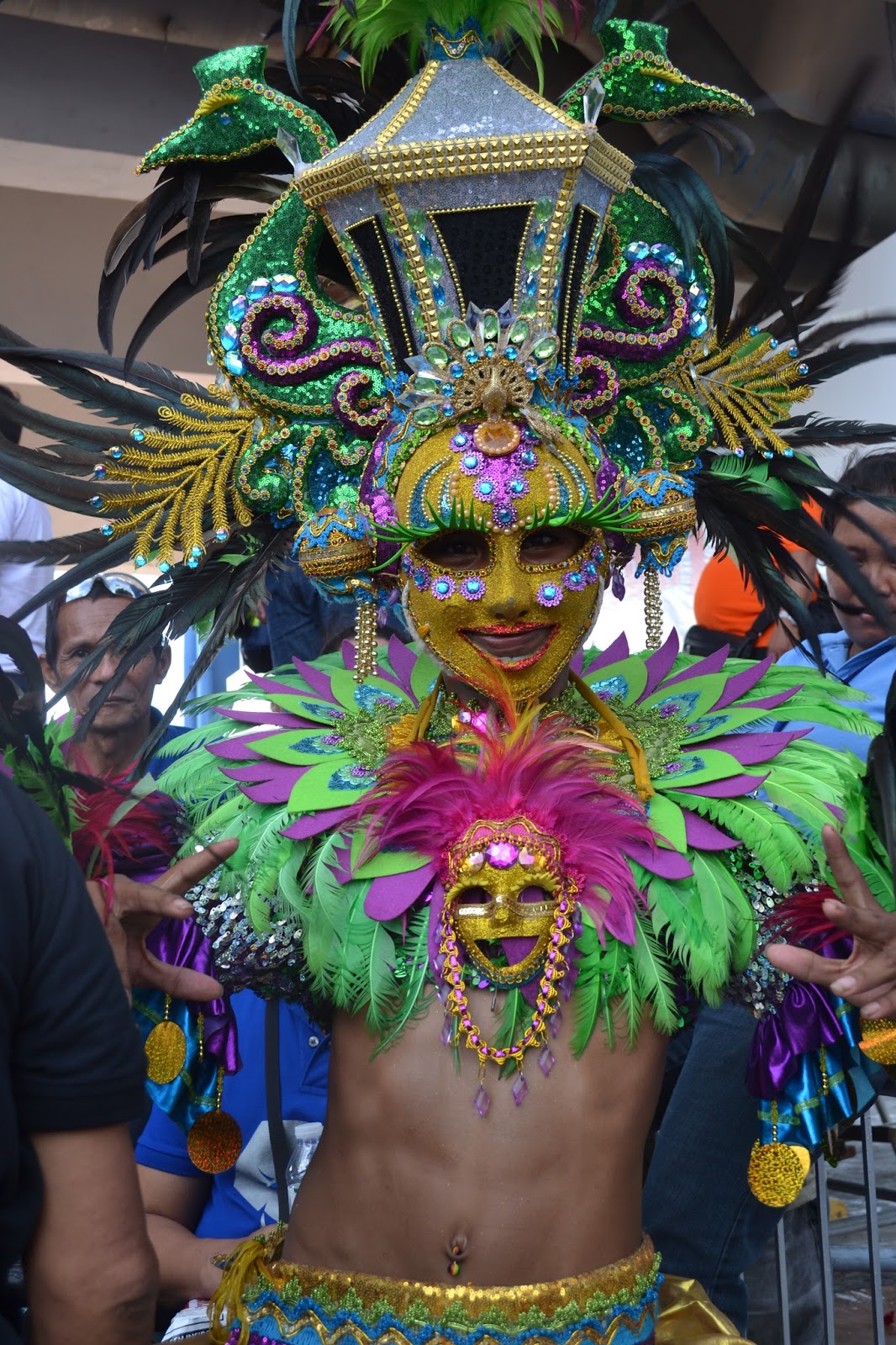
The word ‘Masskara’ was coined by the late artist Ely Santiago from the  word “mass”, meaning many or multitude of the people, and the Spanish word ‘cara’ meaning “face”. A prominent feature of the festival is the feature mask worn by participants. These are always adorned with smiling faces. Masskara thus a multitude of smiling faces. The smiling face which is the primary symbol of the Festival represent the positive outlook in life that despite all the distress and difficulties.
Truly Masskara Festival has become pride of Bacolod City and is now a World Class Festival of the Philippines.
Held in October closest to Bacolod’s City’ Charter Day – Oct 19, Masskara Festival dramatizes the steadfast character of the Negrenses and symbolises what the people of Bacolod do best – putting on a happy face and positive energy when confronted with challenges.

As the Mayor of Bacolod City Monico Puentavella puts it: “It is time to enjoy the world’s most colourful festivals, and the country’s happiest festival. Experience the vibrance, have fun, and laughter, enjoy the friendship and excitements of the city’s celebration.”
While the highlight of the festival is on the third week (Oct 11-19 this year), celebrations are actually a month long with many pre-festival activities lined up.
Pre-festival activities include shopping malls having mannequins dressed in Masskara costumes, seafood alleys, Masskara nights, motorcycle races, exhibitions, boxing competitions, kite flying competitions, fireworks displays, singing contests, gold competitions to name a few from the long list.
A word of caution to those wanting to make the trip next year – make your hotel arrangement at least two to three months in advance.
Besides, the 3.1 million residents of Bacolod City and Visayas, they have visitors from all over the world besides locals from other islands of Philippines.
Koreans who are many in Philippines, who besides doing business have used the country as their base to study the English language, make up the majority of the revellers besides Japanese and Europeans.
 Street parties, endless variety of local food, crazy costumes and smiles all around, make the festival it and unforgettable experience.
With the beating drums and the festival songs reverberating in the air, you’d have to fight the urge to dance.  At least until the best part - the street dance competition, where performers from different towns dance through a battle of showmanship and creativity. Then the street is transformed into a huge dance floor, and everyone's a competitor!
Masks are the order of the day at the Masskara parade, as brightly-costumed men and women dance and strut in the streets. Their beaming faces are be-dimpled, smiling and laughing in moldedclay or papier-mâché
The last three days of the festival is when the mayhem begins every afternoon starting at 1pm at the longest street in Bacolod – Lacson Street – declared the Lacson Tourism Strip – which is closed to traffic.
Dinnertime is barbecue time and this city means only one thing – chicken insal. This delicious grilled ginger, garlic and lemongrass infused delicacy was conceived here and Bacolod City’s best-loved culinary export.
At this point, it is time to resume the revelry at Lacson Street where the Masskara steet party heightens up after sundown. Masks again are the order of the day at the Masskara parade, as brightly-costumed men and women dance and strut in the streets.
The masks in the history of the festival is constantly changing from masks influenced by native Filipinos which slowly was then influenced by carnival of Venice and Rio. Earlier Masks had feathers, native beads, and masks were hand painted while modern masks feature plastic beads, plastic.
It’s a sea of vibrant colours, eclectic patterns, and huge smiles.
No festival is complete with a beauty pageant contest which is another highlight in the festivity - of course, the Masskara Queen is the girl with the most beautiful smile, epitomising the spirit of the festival itself.
The Electra-Masskara at night is another highlight of the day as the street dancers add colourful lights to their costume and parade.
In the afternoon, qualifying rounds for the Masskara festival are held at the Plaza in downtown Bacolod.
On the final day, on Monday this year, the parade begins at the old stadium - Paglaum Sports Complex and ends in the city in front on the SM Mall – a 5km distance.
 The 61 Barangays (districts) of Bacolod City represents the communities that make up the total population of this city and symbolizes the diverse subcultures that are unique within each barangay unit.
Different strokes for different folks, is clearly seen that in each barangay circle is found in distinction from among the rest.
In fact every group is represented is represented in the parade on the final day - civic associations, commercial establishments, schools, even private and government organisations. They march out in excited crowd wearing their painted masks and elaborate costumes, all vying for prizes in judging that will be held. Floats too make the parade.


This year, defending champions, the dancers from Granada Barangay (below), emerged champions again.

I was in Bacolod for a week and not a day went out excitement, festivity, colour, food galore, party and of course the smiles everywhere.
This annual festival, which has become one of Philippines best known tourist attraction, has been earning raves both from local and foreign tourists.
Indeed it is a festival not to be missed and rest assured that it will etch memories which you cherish for a lifetime.

History of Negros Island:
It is believed that Negros was once part of a greater mass of land but was cut off either by what geologist call a continental drift or by rising waters during the so –called glacial-age. Among its earliest inhabitants were dark-skinned natives belonging to the Negrito ethnic group with their unique culture. Thus, the Spaniards called the land ‘Negros’ after the back natives whom they saw when they first came to the island in 1565.

How it became the Sugar Capital of the Philippines?
The major boom to the province at the latter half of the 19th century was the widespread cultivation of sugarcane introduced by the Spaniards and the opening of ports like those of Iloilo and Cebu to foreign commerce in 1856.

Key Facts:

Capital: Bacolod City
Population: 3.1 million
Land Area: 7,936.07 sq. km (or 792,607 hectares)
Boundaries:
North – Visayan Sea; East – Negros Occidental; South – Sulu Sea; West – Gulmaras Strait.
Getting to Bacolod City from Kuala Lumpur:
Airlines: (to Manila) Malaysia Airlines and Cebu Air (3 hour 15 minutes)
Connecting from Terminal 2 or 3 in Manila by Cebu Air or Philippines Airlines to Bacolod City (1 hour 15 minutes).
Flying Cebu Air means connecting flight to Bacolod from same terminal – Terminal 3.


Friday, November 6, 2015

Reignite the flickering ambers


 Reignite the flickering light of Malaysian Indian sports

As Hindus celebrate the Festival of Lights come Tuesday, they should ponder whatever happened to their role in Malaysian sports.
Not too long ago, Malaysian Indians played a key role as administrators and athletes in local sports. But today, their role has diminished and become somewhat irrelevant.
I am just underlining the fact that sports has taken a back seat in the Indian community and it is about time something was done about it.
Many factors have attributed to the lack of participation of Malaysian Indians in the sports arena, including a shift in priority to education, migration to the bright city lights from estates and rural areas, distractions of city life, lack of   Indian sports clubs and the diminishing number of Indian school teachers with a sports background.
Another reason could be a move two decades ago to eradicate race-based clubs in an effort to ensure that sports was developed on a multiracial platform.
Whether or not that was a good move is debatable but looking at the smaller number of Indians in sports, maybe it was a setback.
We still have the Malaysian Chinese Football Association, Malaysian Indian Football Association and Malaysian Malay Football Association organising their own tournaments that allow three players of another race to be registered for the competition.
However, the marginalisation of Malaysian Indians in school sports has seen a decline in their presence on the local scene.
It is no different when it comes to sports administrators.
However, this problem is not confined to Malaysian Indians. The Chinese community is in the same situation.
Those were the days when Malaysian teams were truly 1Malaysia and they produced some outstanding results in the international arena.
This is not an exercise to find fault with anyone but an effort must be made to let a truly Malaysian sports community surface again.
To a certain extent, Malaysian Indians have only themselves to blame for what has happened. They are not making a real effort to become relevant.
Bodies like the Tamilian Physical Culture Association (TPCA), Tamil Youth Bells Club, Selangor Indian Association, Kinta Indians Association and other state Indian clubs exist in name only, with some having folded or playing a minimal role. There was a time when these clubs produced many national athletes.
The Malaysian Indian Sports Council (MISC) is supposed to be the saviour of the community but it hardly does anything. However, the Malaysian Indian Football Association (MIFA) founded some twelve years ago by Datuk S. Pathy, who is its vice-president while Datuk T. Mohan is the president - have been doing something for football. Hopefully, some talent will emerge from their programmes.
Last week, MIFA concluded their 10th national Under-23 tournament in Penang. They also hold annual tournaments for under 12 and under 16.
The Under-12 tournaments are also organised at state level.
But the talent is not outstanding because not enough effort is being put in at the state level to develop the players.
The Petaling District FA, in collaboration with MIFA, organises annual Tamil school football tournaments, where about 100 schools from Kuala Lumpur and Selangor compete. There are about 540 Tamil schools in the country.
While football is heading in the direction, other sports like hockey, athletics, and badminton certainly could do with a good p

lan.
The hockey 1MAS programme and even the National Football Development Programme (NFDP) and schools of excellence in the states could make some of the Tamil schools their centres of excellence.
And ex-internationals and coaches who are no longer in elite programmes could assist in coaching in the districts, schools and development programmes.
Indeed, plenty can been done by not only the Indian community but others too to make Malaysian sports ‘Truly Malaysian’. Food for thought during the Deepavali festivity.
Happy Diwali to all Hindu readers and Malaysians.

TONY MARIADASS is a sports
journalist with more than
three decades of experience
and is passionate about
local sports.
He can be reached at
tmariadass@gmail.com
Twitter: @tmariadass​​


Forgotten heros


ATHLETICS
By Tony Mariadass

What next for the experienced coaches?

The Malaysian Athletics Federation (MAF) have taken the bold move to remove old and experienced athletics coaches in their revamp of the coaching set up in preparation for the 2017 Kuala Lumpur Sea Games.
While the appointment of Bukit Jalil Sports School and sports commentator, Zainal Abas as head coach for the Sea Games athletics programme came as a surprise, but it was generally a welcome move by the athletics fraternity.
But in MAF’s process to revamp their coaching staff some of the experienced coaches have been left out.
And among them are V. Subramaniam, S. Jayabalan, S. Muthiah, A. Tripadi whose contracts with the National Sports Council (NSC) were not renewed at the end of August while another two Yu Fang and Jagjit Singh will see their contracts ending at the end of December.
MAF president Datuk Karim Ibrahim confirmed the non-renewal of the six coaches and said new coaches have already been identified, discussed at the joint meeting with NSC and contracts offered for a two-year term under the KL SEA Games project in collaboration with NSC.
“The coaches performance especially at the Singapore Sea Games was reviewed including their Key Performance Index (KPI) and decided that we need to make changes and fresh faces were needed,” said Karim.
“Some of these coaches have been in the system from a minimum of five years to 20 years. When results are not forthcoming, then drastic measures have to been taken. It may not be a popular decision, but sometimes we have to put our sentiments will have to be put aside and think professionally with the future in mind.”
When asked what will happen to these coaches who are very experienced, produced top athletes and even won medals for the nation themselves with the likes of walkers Subramaniam, Yu Fang and Jagjit, middle distance runner Muthiah while Tripadi and Jayabalan have nurtured many athletes to become champions, Karim said MAF will assist them.
Jayabalan
“There was one coach who wanted to return to his state and coach in the state programme and we made strong recommendations. Any others left out who want to join their states programmes, we will assist.
“Besides these coaches if they return to their states and can develop champions for the future, we will consider them back again.
“Anyway case, even the current coaches have KPIs and if they do not perform they will be replaced.”
Asked why MAF did not use these vastly experienced coaches m for their own development programme, Karim said that some of the coaches wanted to retire while other had their own plans.
But one coach – Subramaniam  - who had requested an extension of his contract for another three months to NSC and MAF did not get any response.
Subramaniam to earn some income is now running a food stall at a foodcourt in Ampang.
Indeed a sad scene for Subramaniam who has won six gold medals and five  silvers in five Sea Games, qualified for the 1980 Moscow Olympics Games, but had to skip it because of the boycott by Malaysia, in 1978 Bangkok Asian Games won the silver medal and 1982 Games finishing fourth and two bronze medals from the Asian Track and Field in 1979 and 1981 and named Selangor Sportsman for two consecutive years – 1978 and 1979 – and was also named the National Sportsman of the Year in 1978.
In the meantime new coaches have been appointed and awaiting their contracts from NSC.
The team of coaches is headed by Bukit Jalil Sports School teacher and sports commentator, Zainal Abas, who has eleven coaches under him.
Among them include four foreigners – Gu Yuan, Franstisek Petrovic, Victor Sotnikov and Alim Akhmejanov, who have been coaching in Malaysia for some time now.
Among the fresh faces are former 800m champion Josephine Mary, who represented the nation in six Sea Games (1983 – 1993), three Asian Track and Field (ATF) championships (1987-1991) and two Asian Games 1986-1990) and still holds the 800m national record set at the Seoul Asian Games in 1986 where she won the bronze medal in a time of 2:07.44.
Others include former national walker Lim Teoh Boon and 400m runner Hamberi Mahat.
MAF is also waiting NSC approval to hire a Jamacian, Leo Almando Brown for sprints and hurdles and Kenyan Samuel Kipsang Rono for middle and long distance.
“Both are highly qualified coaches MAF had shortlisted after vetting many foreign applications. They came with the recommendation of their respective nation’s athletics federation’s presidents,” said Karim.
Leo has trained top class athletes in Jamaica and also coached in the Caribbean Islands, Canada, Mexico, North America and European countries.
Kipsang Rono who has been training the Kenyan national athletes since the 1996 Atlanta Olympics Games.
“We are embarking on revamped path to bring results starting with the Sea Games in Kuala Lumpur, we hope everyone understands that and supports us.
“We cannot just be continuing with our old ways. We have to make changes if things are not going right.”
MAF have also named 57 athletes – 24 men and 23 women – for the KL SEA Games first phase from Sept 2015 to Sept 2016.
Forty-six gold medals were up for grabs in track and field events in Singapore, but Malaysia only returned with three golds, two silvers and nine bronzes.
All three golds came in the men’s field events – high jump (Nauraj Singh Randhawa), discus (Mohd Irfan Shamsuddin) and triple jump (Muhammad Hakimi Ismail - in new Games record).
It was Malaysia’s worst-ever performance in the history of the Games.
At the 2013 Myanmar SEA Games, Malaysia won four gold medals.
 
2017 Sea Games Athletics Project (1st phase Sept 2015 – Sept 2016)
Head coach: Zainal Abas
Coaches:
1.     Gu Yuan  (hammer throw )2. Frantisek Petrovic (discus) 3. Victor Petrovic (triple jump) 4. Alim Akhmejanov (high jump) 5. Hamberi Mahat (400m men/relay) 6. Entheran Subramaniam (middle/long distance)) 6. Teh Weng Chang (pole vault) 7. Shahadan Jamaluddin (hurdles) 8. Balamurugan Maniam (short sprints) 9. Josephine Mary Singarayar (400m women/relay) 10. Lim Teoh Boon (walk)

ATHLETES (men)
1.     Adi Aliffuddin Hussin 2. Ahmad Luth Hamizan 3. G Aravin Thevarr 4. Abdrul Hisyam Abdul Manap 5. K. Dinesh 6. Harith Ammar Mohd Sobri 7. Iskandar Alwi 8. Jackei Wong Siew Cheer 9. Johathan Nyepa 10 M. Kesavan 11. Mohamad Arif Zulhilmi Alet 12. Mohamad Shamrin Mohd Aris 13. Mohd Izzuddin Yahaya 14. Mohd Shamimi Azmi 15. Muhaad Firdaus Musa 16. Muhammad Azam Masri 17. Muhammad Hakimi Ismail 18. Muhammad Irfan Shamsuddin 19. Muhammad Khairul Harith Harun 20. Muhammed Ashraff Saiou Rahman 21. Muhd Ajmal Aiman Mat Hassan 22. Nauraj Singh Randhawa 23. Nixson Kennedy 24. Rayzam Shah Wan Sofian 25 Russel Alexander Nasir Taib

(Women)

1.     Bibi Nuraishah Ishak 2. Chuah Yu Tian 3. Elena Goh Ling Yin 4. Fatin Faqihah Mohd Yusof 5. Grace Wong Xiu Mei 6. Kirthana Ramasamy 7. Komalam Shally Selvaretnam 8. Ku Munirah Ku Zamzuri 9. Noor Amira Mohamad Nafiah 10. Nor Shahidatun Nadia Mohd Zuki 11. Norris Foo 12. Nur Fatin Abidah Suharman 13. Nurfazira Jalaludin 14. Nurul Faizah Asma Mazlan 15. Raja Nursheena Raja Azhar 16. Saidatul Izzati Suhaimi 17. Savinder Kau Joginder Singh 18. Shereen Samson Vallabouy 19. Siti Fatima Mohamad 20 Yap Jeng Tzan 21. Yap Sean Yee 22. Zaimah Atifah Zainuddin